When a business owner applies for trademark registration, many people assume that once the application is submitted, the registration process is almost complete. In reality, a trademark application can face different legal or procedural challenges during the registration process.
Two terms that often create confusion are Trademark Objection and Trademark Opposition.
Although both can create problems for a trademark application, they are not the same thing. They happen at different stages of the registration process and are raised for different reasons.
If you are planning to register your brand name, logo, or business identity, understanding this difference can help you respond correctly and avoid unnecessary delays.
What Is a Trademark Objection?
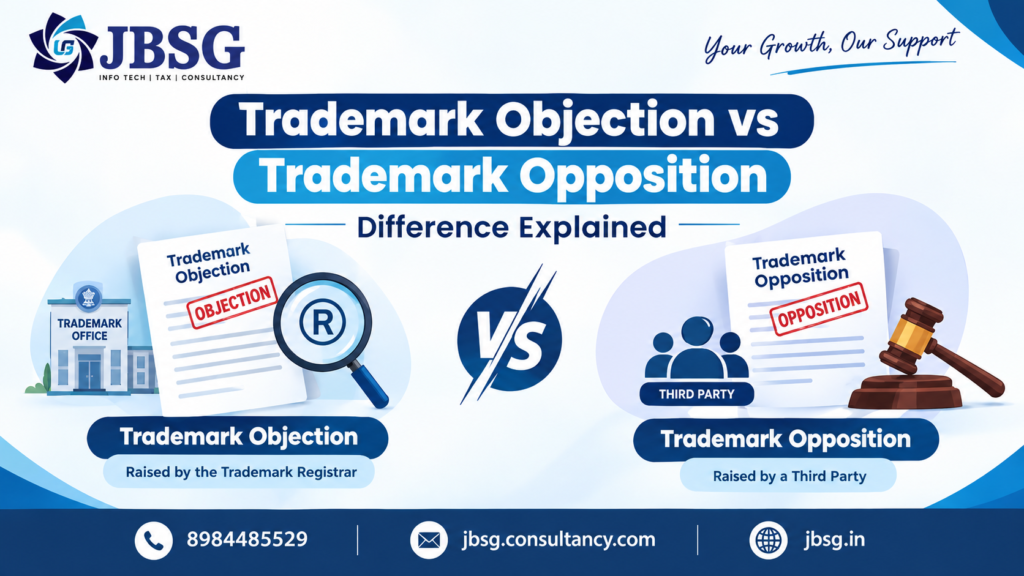
A Trademark Objection is generally raised by the Trademark Registrar during the examination of a trademark application.
After an application is submitted, the Trademark Office examines it to determine whether the proposed trademark meets the requirements of the Trade Marks Act and related rules.
If the examiner finds an issue with the application, an examination report may be issued raising an objection.
For example, an objection may arise if:
- The trademark is similar to an existing trademark.
- The proposed mark is considered descriptive of the goods or services.
- The mark lacks sufficient distinctiveness.
- There are issues with the classification of goods or services.
- The application does not satisfy certain legal requirements.
Receiving an objection does not automatically mean that the trademark application has been rejected.
The applicant generally gets an opportunity to respond to the objection by submitting an appropriate reply along with supporting documents and arguments.
What Is a Trademark Opposition?
A Trademark Opposition is different from an objection.
An opposition can be filed by a third party who believes that the trademark application should not proceed to registration.
After a trademark application is accepted or advertised in the Trade Marks Journal, there is a period during which a third party can oppose the application.
For example, imagine a company has been using the brand name “ABC TECH” for several years. Another business applies for registration of a similar mark, “ABC TECHNOLOGY,” for related services.
If the existing brand owner believes that the new application could create confusion or affect its trademark rights, it may choose to file an opposition.
So, unlike an objection, an opposition is generally raised by another person, business, or entity, rather than by the Trademark Registrar.
Trademark Objection vs Trademark Opposition: What Is the Difference?
The easiest way to understand the difference is to look at who raises the issue and at what stage.
| Point | Trademark Objection | Trademark Opposition |
|---|---|---|
| Who raises it? | Trademark Examiner/Registrar | Third party |
| When does it happen? | During examination | After publication in the Trademark Journal |
| Main purpose | To identify issues with the application | To prevent registration of the proposed trademark |
| Who responds? | Trademark applicant | Trademark applicant |
| Reason | Legal, procedural, or examination-related concerns | Third party’s rights or objections |
| Does it mean automatic rejection? | No | No |
| Can it be contested? | Yes, through an appropriate reply/process | Yes, through the prescribed opposition proceedings |
Why Does a Trademark Objection Happen?
There is no single reason behind every objection. The reason depends on the trademark and the circumstances surrounding the application.
One common reason is similarity with an existing trademark.
For instance, if a new applicant wants to register a mark that looks or sounds very similar to an already registered mark in the same or related class, the examiner may raise a concern.
Another reason could be that the trademark is too descriptive.
Suppose someone tries to register a very ordinary term that directly describes the goods or services. The Trademark Office may question whether the mark is distinctive enough to function as a trademark.
Other issues can also arise from incorrect classification, incomplete information, or other requirements related to the application.
This is why conducting a proper trademark search and preparing the application carefully before filing can be very useful.
Why Does a Trademark Opposition Happen?
Opposition is usually connected with the rights or interests of another party.
A trademark owner may oppose a new application if it believes that the proposed mark is confusingly similar to its own trademark.
An opposition may also be based on other grounds recognised under trademark law, depending on the specific circumstances of the case.
For businesses, this is one reason why trademark monitoring can be important. Registering your own trademark is only one part of protecting a brand. Keeping an eye on new applications that may conflict with your brand can also matter.
Is Trademark Objection the Same as Trademark Rejection?
No.
This is an important point that many applicants misunderstand.
A trademark objection means that an issue has been raised and the applicant has an opportunity to respond.
A rejection is a different stage or outcome.
If you receive an examination report containing an objection, you should not immediately assume that your brand name is lost. The next step is to understand the exact objection and prepare an appropriate response within the applicable timeline.
Ignoring the objection, however, can create serious problems for the application.
Is Trademark Opposition the Same as Trademark Rejection?
Again, no.
An opposition means that someone has challenged the application.
It does not automatically mean that the opponent will win or that the trademark will be rejected.
The applicant gets an opportunity to defend the application through the prescribed legal process. The final outcome depends on the facts, evidence, arguments, and applicable trademark law.
What Should You Do If Your Trademark Gets an Objection?
The first thing is not to panic.
Read the examination report carefully and identify the exact grounds mentioned by the Trademark Office.
Depending on the objection, the response may involve:
- Preparing a detailed examination reply.
- Providing documents supporting the use of the mark.
- Explaining why the mark is distinctive.
- Addressing similarity concerns.
- Providing relevant evidence or legal arguments.
- Attending a hearing if required.
The correct response depends on the specific objection. A generic reply may not always be sufficient.
What Should You Do If Someone Opposes Your Trademark?
An opposition should be taken seriously because it involves a dispute with another party.
The applicant needs to follow the prescribed procedure and respond within the applicable time limits.
Depending on the matter, the process may involve pleadings, evidence, counter-statements, hearings, and other legal steps.
Since an opposition can become more complicated than a simple examination objection, getting proper professional or legal assistance can be useful.
How Can Businesses Reduce the Risk of Trademark Problems?
No one can guarantee that a trademark will never face an objection or opposition. However, businesses can take some practical steps before filing.
1. Conduct a Trademark Search
Before applying, check whether similar trademarks already exist.
A proper search can help identify potential conflicts at an early stage.
2. Choose the Correct Trademark Class
A trademark is registered in relation to specific goods or services. Selecting the appropriate class is therefore an important part of the application.
3. Avoid Blindly Copying Existing Brands
A brand name that is too close to an established trademark can create unnecessary complications.
Creating a distinctive brand identity can be a much better long-term approach.
4. Prepare the Application Carefully
Incorrect information or avoidable mistakes in the application can create delays and additional work.
5. Monitor the Application
After filing, don’t simply forget about the application.
Keep track of its status and take action whenever the Trademark Office or another party raises an issue.
Final Thoughts
Trademark Objection and Trademark Opposition may sound similar, but they are actually two different parts of the trademark registration process.
An objection is generally raised by the Trademark Office during examination, while an opposition is generally filed by a third party after the application is published in the Trademark Journal.
Understanding this difference is important for every business owner who wants to protect a brand name, logo, or other trademark.
More importantly, receiving an objection or opposition does not necessarily mean that the trademark cannot be registered. What matters is understanding the issue, responding within the applicable timeline, and presenting the case properly.
If you are planning to register a trademark or have received a trademark objection, professional guidance can help you understand the next steps and handle the process more effectively.
Need Help With Trademark Registration?
JBSG Consultancy provides professional assistance for trademark registration and related business registration services. Our team can help you understand the registration process, documentation requirements, and the next steps involved in protecting your brand.